APPLICATION HOSTING
The infrastructure should match the software.
Architecture decisions should reflect workload, availability, data, integration, and operational needs.
LogicAide designs cloud environments, application infrastructure, secure connectivity, deployment pipelines, monitoring, and system integrations that support reliable custom software and connected operations.
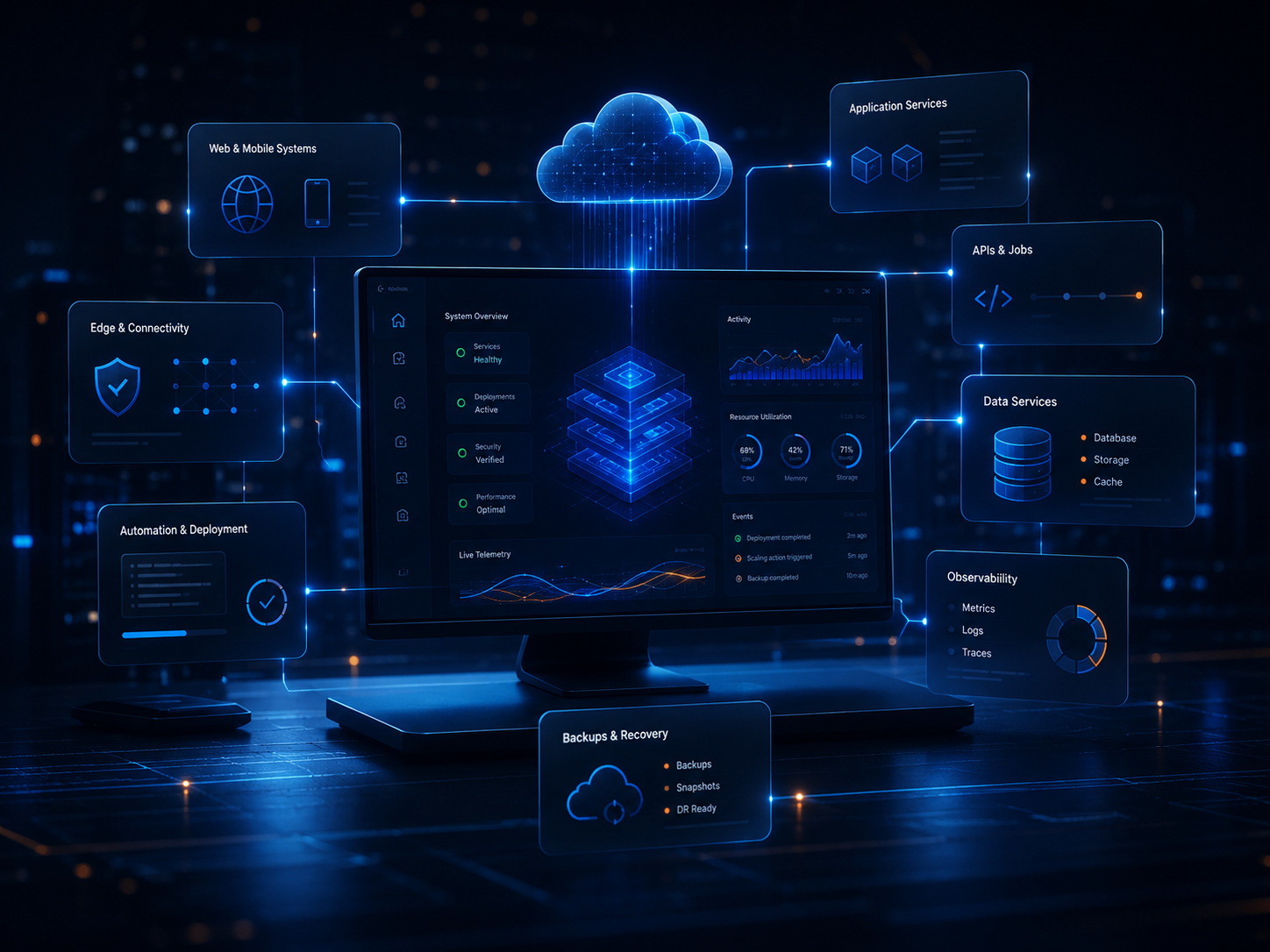
Hosting, identity, networking, deployment, storage, monitoring, backups, security controls, and integrations all shape how well a system performs once real users depend on it.
Architecture decisions should reflect workload, availability, data, integration, and operational needs.
Applications, APIs, cloud services, remote resources, and business systems often need controlled connectivity.
Monitoring, alerting, logging, backup strategy, and deployment discipline help keep systems supportable.
We focus on the architecture required to support the application, the data, the users, and the operational model.
Compute, storage, databases, service boundaries, scaling, and deployment structure.
Private/public boundaries, remote connectivity, routing, segmentation, and service access.
Users, roles, service identities, permissions, and secure access patterns.
Repeatable builds, environment configuration, releases, rollback, and controlled change.
Operational visibility into health, performance, failures, and system behavior.
Data protection, restoration paths, retention, and practical recovery procedures.
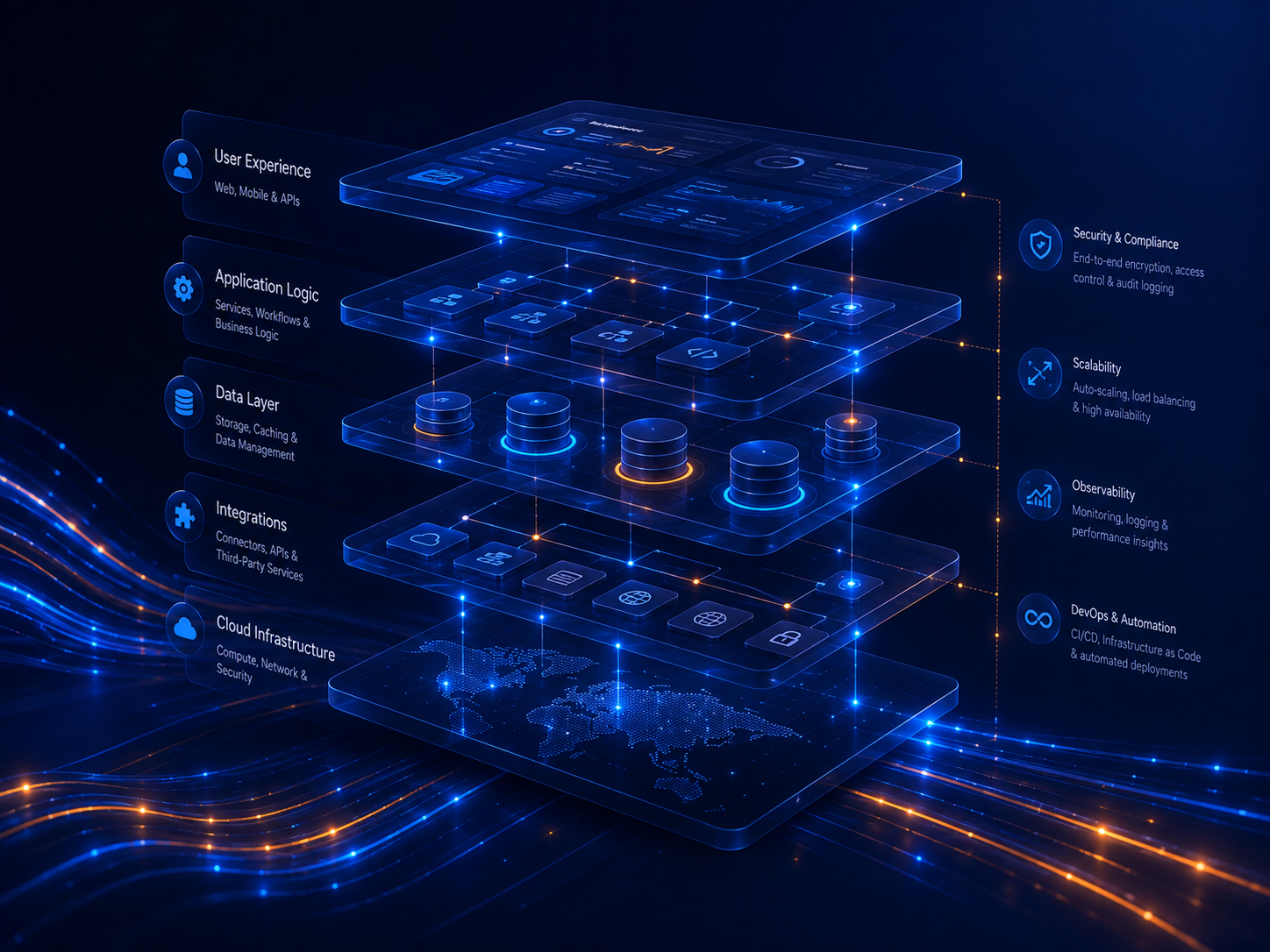
Separating experience, application services, data, integrations, infrastructure, and operations makes the system easier to understand, maintain, scale, and change.
A smaller system does not need enterprise complexity. A critical system should not depend on fragile shortcuts.
Keep application logic, data, integrations, identity, and infrastructure understandable and replaceable.
Design authentication, authorization, secrets, network exposure, and service access as part of the architecture.
Deployments, logs, monitoring, backups, and recovery should be considered before the system becomes business-critical.
This representative environment shows how application services, data, identity, connectivity, observability, and integrations can work together as one managed system.
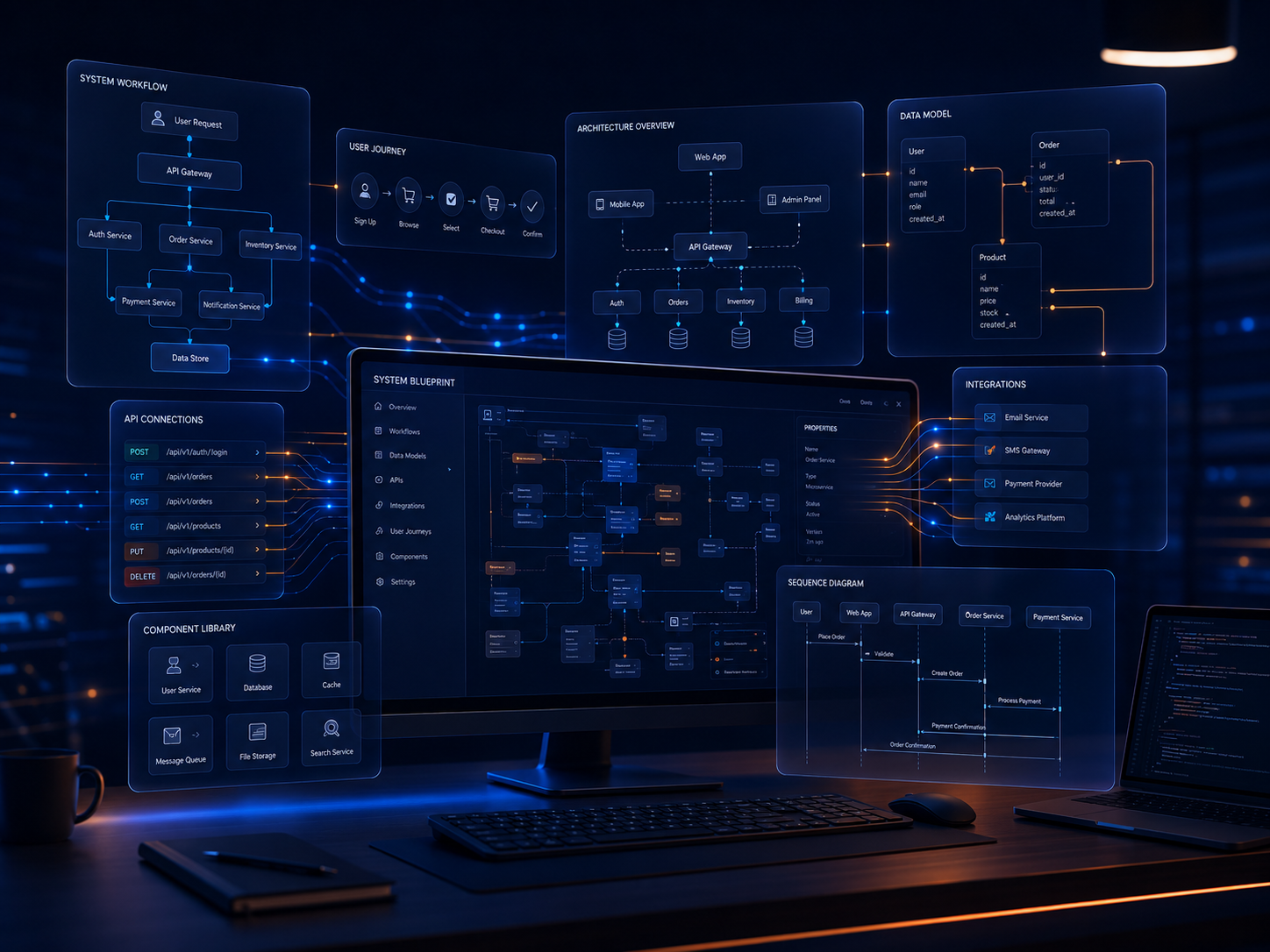
Users, traffic, data, integrations, availability, security, and operational requirements.
Services, data, networking, identity, environments, and deployment structure.
Infrastructure, deployment automation, configuration, connectivity, and application services.
Deployment, access, logging, monitoring, backup, restore, and failure behavior.
Refine performance, reliability, costs, monitoring, security, and deployment behavior over time.
No. Cloud and network work can include new architecture, modernization, integration, deployment improvements, monitoring, or targeted changes to an existing environment.
Yes. The same backend services, APIs, identity, data, and infrastructure can often support multiple application experiences.
Yes, depending on network access, security requirements, available APIs or interfaces, and the constraints of the existing systems.
Not necessarily. The architecture should match the actual product, team, scale, and operational needs rather than introducing complexity without a clear benefit.
We can design the application environment around how the software actually works.